By Ishola Michael
An Environmental Scientist and lecturer at the Abubakar Tafawa Balewa University (ATBU), Bauchi, Prof. Ahmed Abdulhameed, has called for urgent ecological restoration, warning that humanity has pushed the Earth beyond its natural capacity to recover from environmental damage, creating what he described as an “environmental overdose.”
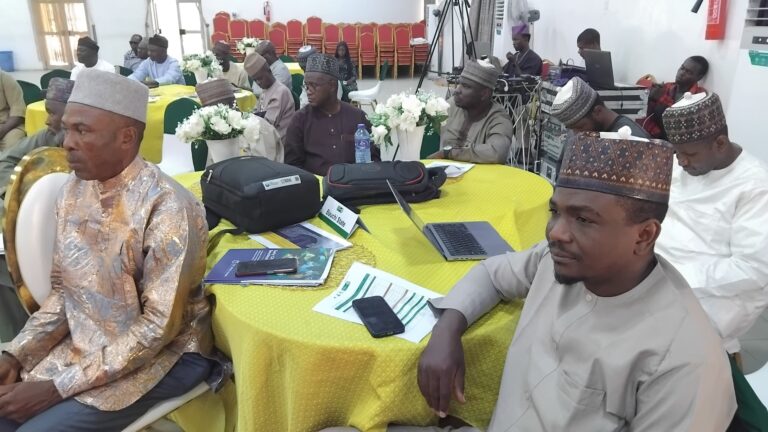
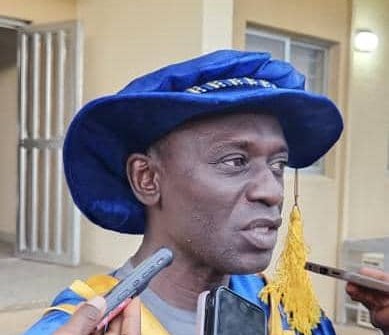
Prof. Abdulhameed made the call while delivering the 48th edition of the University’s Public Lecture titled, “The Earth on Overdose: The Anthropocene and the Call for Ecological Restoration.”
He emphasised that ecology is not merely a descriptive science but a practical discipline that offers solutions for restoring ecosystems, ensuring food security, and promoting sustainable development.
The professor explained that the Anthropocene is an era in which human activities have become the dominant force shaping the Earth’s ecosystems. He identified population growth, industrialisation, urbanisation, deforestation, fossil fuel consumption, intensive agriculture, excessive use of fertilisers and pesticides, and consumerism as key drivers of climate change, biodiversity loss, pollution, and ecosystem degradation.
According to him, “While agricultural expansion, irrigation, mechanisation, fertilisers, and pesticides have greatly increased food production, they have also caused unintended ecological consequences such as soil degradation, salinisation, pollution, loss of beneficial soil organisms, and declining biodiversity.”
He stressed that sustainable agriculture ultimately depends on healthy ecosystems, fertile soils, beneficial microorganisms, pollinators, and stable climatic conditions.
Prof. Abdulhameed traced his academic journey spanning more than three decades, highlighting his research in forest ecology, biodiversity conservation, ecotoxicology, entomopathogenic fungi, mycorrhizal biotechnology, food safety, ecological restoration, and food security.
He disclosed that his research has contributed to agroforestry, environmental monitoring, heavy metal pollution studies, biological control, mycorrhizal biofertilisers, and sustainable agriculture, while fostering international collaborations, attracting research funding, and mentoring postgraduate students.
Concluding his lecture, Prof. Abdulhameed stated that, “Solutions to today’s environmental crisis must themselves be ecological.” He advocated harnessing beneficial microorganisms, developing microbial agro-input industries, strengthening ecotoxicology research, building scientific capacity, restoring degraded ecosystems, and promoting sustainable food systems.
He also unveiled his vision of establishing a microbial agro-input factory and a Centre of Excellence in Ecological Restoration, while encouraging scientists, students, and policymakers to develop knowledge and technologies that protect the environment and improve human well-being.
Earlier, the Vice-Chancellor of Abubakar Tafawa Balewa University, Prof. Ibrahim Hassan Garba, urged professors in the institution to take advantage of the University’s new policy by applying to deliver their inaugural lectures, noting that the response from eligible academics had not been encouraging.
“By this time, we should have several requests lined up for the exercise, which is exactly what is expected from eligible presenters,” he said.
While commending the University’s Ceremonies Committee for its efforts, the Vice-Chancellor called for wider awareness of the new arrangement, under which professors now apply to present their inaugural lectures instead of waiting for presentations based on seniority.
He also urged the committee to invite distinguished professionals outside academia to deliver periodic public lectures.
“There are academics in public service and seasoned administrators leading key government institutions and private organisations who have a lot to share with us on this platform. I am sure the committee will do the needful in this regard,” he added.