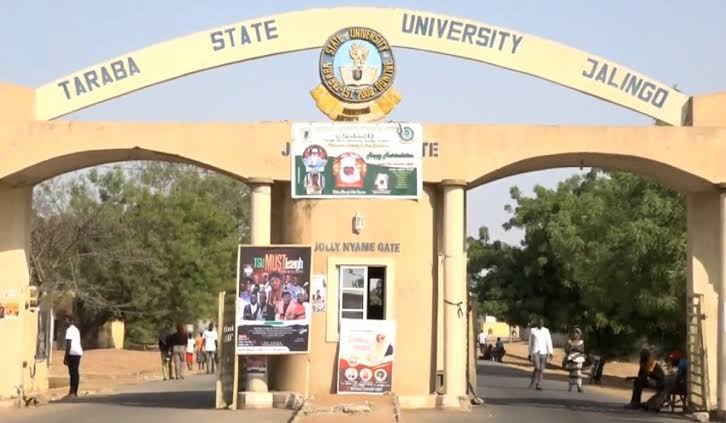
The Academic Staff Union of Universities (ASUU), Yola Zone, has declared its total solidarity with the Taraba State University (TSU) branch over its ongoing industrial action, describing the strike as legitimate and demanding the immediate and unconditional implementation of the 2025 Federal Government-ASUU Agreement.
The union also faulted the Taraba State Government for what it described as unnecessary delays and administrative bottlenecks in implementing the agreement, saying the situation had subjected the university’s academic staff to avoidable hardship.
The Zonal Coordinator, Comrade Dani Mamman, stated this while addressing journalists after an expanded congress meeting of the union in Jalingo.
Mamman said the grievances of ASUU-TSU were legitimate and deserved immediate, decisive and unequivocal attention from the state government.
He said the zone’s support for the striking lecturers was rooted in the principles of justice, equity, collective responsibility and the protection of the legitimate rights and entitlements of academic staff.
The ASUU Yola Zone comprises seven public university branches across Adamawa, Borno, Taraba and Yobe states.
They are Adamawa State University, Mubi; Federal University Gashua; Kashim Ibrahim University, Maiduguri; Modibbo Adama University, Yola; Taraba State University, Jalingo; University of Maiduguri; and Yobe State University, Damaturu.
Mamman frowned at the state government for treating Taraba varsity lecturers differently from their counterparts in other universities across the North-East, urging it to end further delays and implement the agreement.
He said a fact-finding report submitted to the union by the Taraba State Government on September 24, 2026, following visits to public universities in the North-East, established that the institutions covered had fully implemented the 2025 FGN/ASUU Agreement.
According to him, the finding made the continued delay in Taraba State University particularly difficult to understand, especially as other universities in the zone had adopted the payment tables provided under the agreement without undergoing similar fact-finding exercises.
He said: “It is worth noting that the report of the Taraba State Government’s fact-finding team on its visits to state universities in the North-East geopolitical zone, officially presented to the union on September 24, 2026, established that the institutions covered by the exercise had fully implemented the 2025 FGN/ASUU Agreement.
“The Yola Zone considers this finding particularly significant and puzzling, given that other universities in the zone did not undergo fact-finding exercises but instead adopted the payment tables provided under the 2025 FGN/ASUU Agreement.
“Nevertheless, having undertaken and concluded a verification exercise since August 2026, which established the level of implementation in the institutions visited, the Taraba State Government has no reasonable basis for subjecting ASUU-TSU to further avoidable administrative processes that could frustrate the implementation of the agreed remuneration framework.”
The zonal coordinator also expressed concern over what he described as the state government’s continued resort to endless financial computations, particularly its consideration of alternative implementation percentages of 95, 98 and 100 per cent after a conclusive verification exercise.
He described the approach as unacceptable, insisting that all necessary consultations, negotiations and financial computations had been concluded, leaving no justification for further administrative delays.
The union consequently called on the Taraba State Government to immediately and fully implement the agreed remuneration framework arising from the 2025 FGN/ASUU Agreement without setting up additional committees or embarking on fresh verification exercises.
It also demanded the immediate settlement of all outstanding arrears based on the financial computations submitted by the tripartite committee.
Other demands include strict adherence to the standard payment template stipulated in the 2025 agreement and immediate, meaningful engagement with ASUU-TSU in accordance with the principles of collective bargaining and mutual respect.
The union maintained that the state government must act without further delay to resolve the dispute and address the concerns of the university’s academic staff.