By Gabriela Ezin, Calabar
Stakeholders in Nigeria’s coffee industry have called for urgent measures to address declining production, weak market structures and inadequate support for farmers, warning that the country risks losing out on opportunities in the global coffee trade.
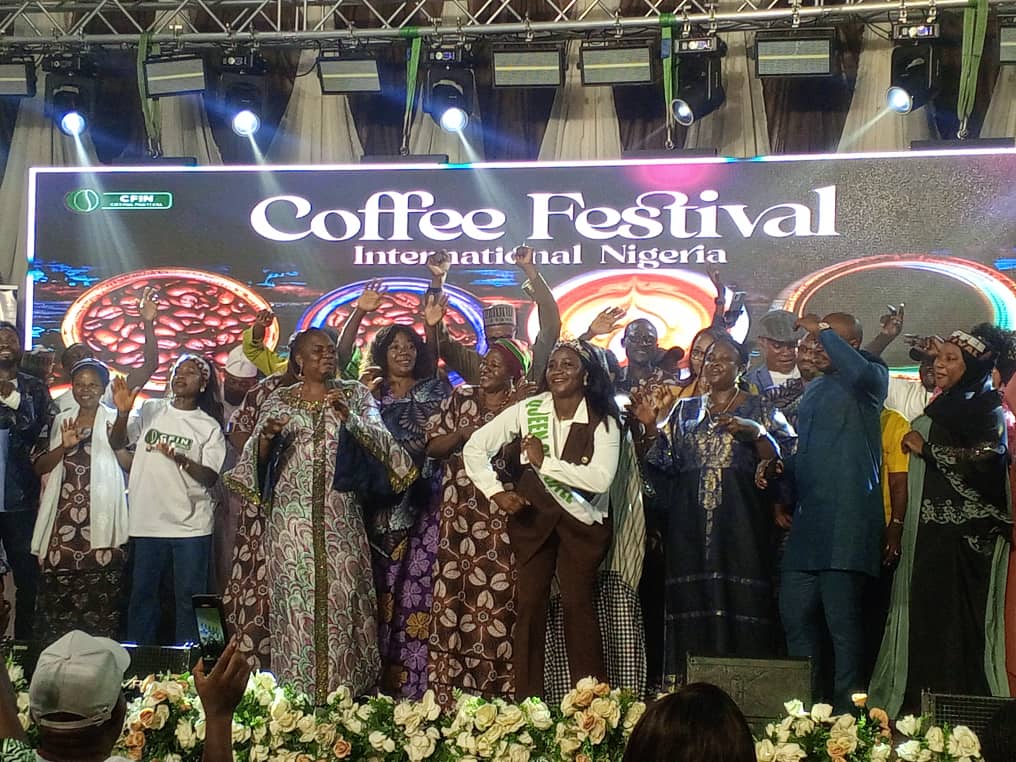
They made the call at the weekend at the three-day Coffee Festival International Nigeria in Calabar, Cross River State, where participants from South Africa, Rwanda, Ghana, Namibia, Kenya, Ethiopia, Tanzania and Brazil joined Nigerian stakeholders to discuss the future of the industry.
The National President of the National Coffee and Tea Association of Nigeria (NACOFTAN), Dr Hassan Kakara, said Nigeria must first address the factors responsible for the collapse of its once-thriving coffee sector before talking about sustainability.
Kakara identified poor leadership, disorganised cooperatives and the absence of a strong national structure to represent farmers and industry operators as major setbacks to the sector.
He stressed that Nigeria needed an effective national association capable of coordinating activities, protecting farmers’ interests and providing the platform for advocacy and engagement with government and investors.
Comparing Nigeria’s situation with Kenya, he noted that the East African country had established a more coordinated system in which coffee cooperatives and industry stakeholders operated through recognised national structures.
He said Nigerian farmers continued to face difficulties accessing markets and sustaining production because of inadequate institutional support, urging stakeholders to strengthen their organisations rather than operate independently.
The Chief Executive Officer of Lingzhi Global Nigeria Limited, Blessing Tangtur, said rebuilding the industry also required connecting farmers to buyers, processors and exporters to ensure that production translated into economic benefits.
Tangtur, host of the festival, observed that many farmers lacked information about the commercial opportunities available after harvesting their coffee, including processing, marketing and export.
She said the gathering was intended to bring together different players in the value chain, encourage investment and create direct business relationships that would improve farmers’ access to markets.
She recalled that the maiden edition of the festival was held in Plateau State in 2025, adding that the initiative had helped generate interest in Nigerian coffee and attract international development support.
Tangtur also claimed that recorded coffee consumption in Nigeria had increased from fewer than two million to about 12 million following the awareness and data-gathering activities associated with the previous festival.
Representing Governor Bassey Otu, the Cross River State Commissioner for Agriculture and Irrigation Development, Johnson Ebokpo, said the state was leveraging its agricultural potential to become a major centre of coffee production in Nigeria.
Otu said the development of the industry required sustained investment in research, improved planting materials, farmer development, processing infrastructure and access to local and international markets.
He disclosed that the state had developed a Coffee Development Roadmap covering 2025 to 2032 to guide the rebuilding of its coffee value chain.
According to him, Cross River’s four agroecological zones, extensive arable land and favourable rainfall conditions provide opportunities for cultivating different coffee varieties, particularly Robusta.
He said approximately 90 per cent of the state’s 23,000 square kilometres of arable land was lowland, making it suitable for large-scale Robusta cultivation.
The governor said the state’s coffee development programme was also designed to generate employment, particularly for young people, while contributing to Nigeria’s economic diversification and non-oil export drive.
The festival is being held under the theme, ‘Sustainability: Building the Future of Coffee in Nigeria’.