By Ishola Michael
Policymakers and relevant authorities in Nigeria have been urged to formulate policies that address the factors pushing many women into commercial sex work and improve the welfare of those already engaged in the trade.
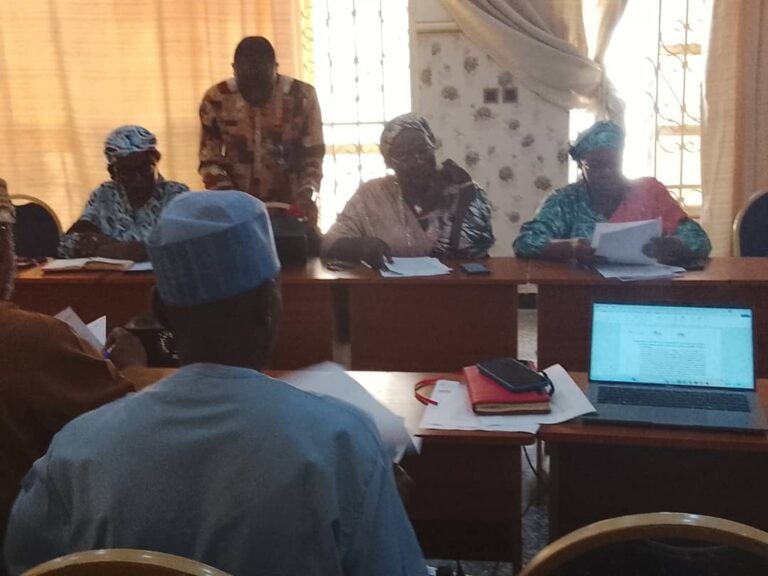
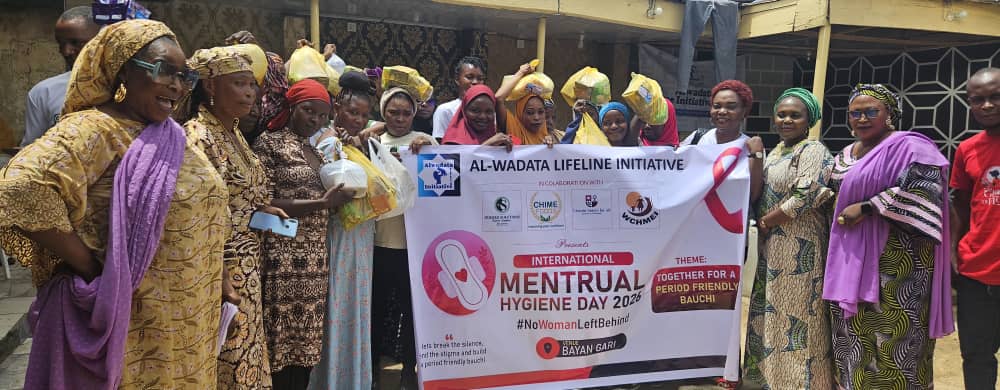
The Executive Director of Al-Wadata Lifeline Initiative, Winnifred Robinson, made the call while speaking at a one-day sensitization programme organized for commercial sex workers in Bauchi to commemorate the 2026 Menstrual Hygiene Day celebration.
Robinson stressed the need for policymakers to consider the unique challenges faced by commercial sex workers when designing social and health interventions.
“All the policy challenges facing commercial sex workers should be addressed. Policymakers should also focus attention on them because they need support and should not be left behind when these policies are being formulated,” she said.
She explained that the organization chose to celebrate the International Menstrual Hygiene Day with commercial sex workers in Bayangari because menstrual health concerns affect all women regardless of their social status.
“Menstrual hygiene cuts across all ages, from young girls experiencing menarche to adult women of reproductive age. Our goal is to promote a menstrual-friendly world and, in our case, a menstrual-friendly Bauchi where no woman is left behind,” Robinson said.
Drawing from her years of experience in the field, she noted that society often overlooks commercial sex workers despite the fact that they face the same menstrual health challenges as other women, alongside additional burdens such as economic hardship and stigma.
“Nobody talks about them, even though they are women, they menstruate, and they face the same challenges as every other female, often in more difficult circumstances. We want to raise awareness that they matter and deserve attention and support,” she added.
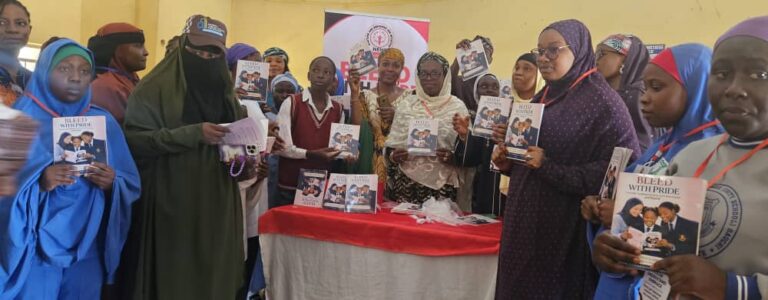
Robinson explained that the programme went beyond awareness creation. Organizers distributed dignity packs containing disposable sanitary pads, detergent, bathing soap and condoms to participants.
“Although Al-Wadata Lifeline Initiative produces reusable sanitary pads, the beneficiaries requested disposable pads, so we provided them free of charge. We also educated them on the benefits of reusable pads,” she said.
She added that the organization also provided food and refreshments for participants.
According to her, the initiative received support from Chime Foods, Uhime Solutions, Ubuntu Sisters for All, Radiant Care Foundation, Nurture Her Initiative and the National Human Rights Commission (NHRC).
Robinson encouraged the women to maintain proper menstrual hygiene and take steps to prevent infections.
She also called on hotel owners to provide adequate Water, Sanitation and Hygiene (WASH) facilities, including clean water, separate toilets for women and secure restroom facilities that guarantee privacy and safety.
“There must be clean toilets, access to water and facilities that allow women to manage their menstruation with dignity and privacy,” she said.
Speaking at the event, the Bauchi State Coordinator of the National Human Rights Commission (NHRC), Yahchit Dala, described menstrual hygiene as a human rights issue.
“Menstrual hygiene relates to human dignity, privacy, non-discrimination, access to facilities and access to information. These are all fundamental human rights issues,” she said.
Dala explained that the sensitization programme aimed to educate participants about their rights and eliminate the stigma associated with menstruation.
“We want them to understand that menstruation is not a source of shame. Women should have access to privacy and facilities that enable them to manage their menstrual health with dignity,” she said.
She noted that governments and civil society organizations have increasingly recognized menstrual health as an important issue, citing national policies and international resolutions that support menstrual hygiene management.
Dala also highlighted the financial burden many women face in purchasing sanitary products.
“The cheapest sanitary pads cost about N500 per pack. Depending on the flow and duration of menstruation, a woman may spend between N3,000 and N4,000 monthly on sanitary products. Many women struggle to afford this alongside other essential needs such as food,” she said.
The NHRC coordinator further educated participants about their rights during encounters with law enforcement agencies.
“Even when law enforcement officers arrest them, they retain their right to dignity. Authorities must not subject them to degrading treatment and should provide access to hygiene facilities and necessary medications where required,” she said.
She emphasized that people living with conditions such as HIV, diabetes and other health challenges have the right to continue receiving their medications while in custody.
“Our goal is to help them understand that they have rights and that institutions such as the National Human Rights Commission are available to assist them in seeking justice when those rights are violated,” Dala added.
Also speaking, Habiba Abubakar of Women and Children Health Made Easy Initiative described menstrual hygiene as a critical aspect of women’s health.
She explained that organizers selected commercial sex workers because they constitute a vulnerable and high-risk population that requires targeted education and support.
According to her, providing them with accurate information would help protect both the women and the wider society.
Abubakar also encouraged the participants to seek reconciliation with their families where possible and explore opportunities for reintegration into mainstream society.
Some of the beneficiaries, including Mariam Alkaleri, Maisaratu Usman and Doris Fatima, commended the organizers for the programme.
They said the sensitization enlightened them on menstrual hygiene practices and pledged to apply the knowledge they gained for their personal well-being.