By Usman Abdullahi Koli
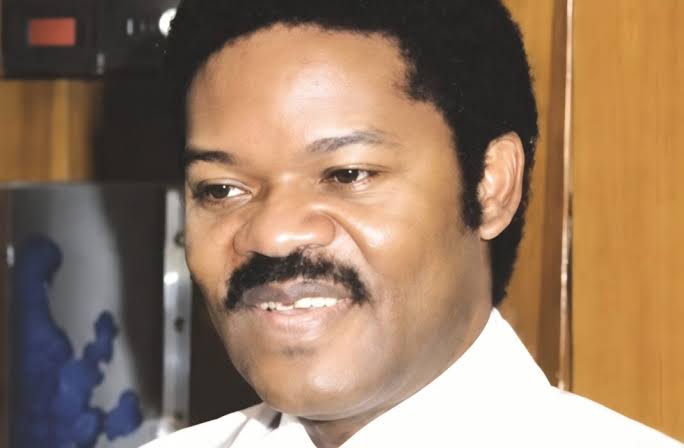
Shakespeare wrote in The Merchant of Venice that “the quality of mercy is not strained; it droppeth as the gentle rain from heaven upon the place beneath.” He was describing something that cannot be manufactured, only received. Something that falls on the just and unjust alike, asking nothing in return, expecting no reward. Bala Maijama’a Wunti embodies this mercy. Not as performance. Not as strategy. But as nature. In Bauchi, they have felt this gentle rain. Beyond Bauchi, they have witnessed its quiet falling. And in the hearts of those who know him, they have gathered it like precious water in a dry land.
Walk through any city in northern Nigeria and you will find men who command attention. They speak loudly. They move with calculated importance. They collect titles the way others collect debts. But walk further, past the noise, into the quieter rooms where people gather to speak honestly, and you will hear a different name. Bala. Not the loudest. Not the most decorated. Just the one people trust with what matters. His name circulates not through publicity but through gratitude. It travels in the private conversations of those he has helped, the whispered recommendations of those who know his character, the unspoken agreement among those who have witnessed his humanity that here, finally, is a man who can be relied upon.
History teaches that goodness rarely announces itself. The Prophet Muhammad, peace be upon him, was known as Al-Amin, the trustworthy, long before he was known as a prophet. His character preceded his mission. People trusted him with their wealth, their secrets, their disputes, because they had watched him when no one was watching. This is the test Bala Wunti has passed without ever seeking the examination. His goodness does not depend on circumstance. It does not shift with audience. It is the same in the palace as it is in the market, the same with the powerful as with the forgotten. Such consistency is not a strategy. It is a state of being. And it is so rare that when we encounter it, we often mistake it for simplicity, not understanding that simplicity of character is the hardest thing a human being can achieve.
In a nation where political relationships curdle with changing seasons, where loyalty is measured in what it yields rather than what it costs, where trust is a currency spent carefully and rarely returned, Bala stands apart. Not because he announces his difference, but because he embodies it. He has learned what most men spend lifetimes failing to grasp: that you can move through the corridors of influence without becoming hollow, that you can hold power without being held by it, that you can remain human in spaces designed to make men into machines. His warmth is not selective. His respect does not check credentials. His kindness does not calculate returns. He moves through life as though every person he meets carries equal worth, revealing what most of us have forgotten: that dignity is not distributed according to status but according to how we treat one another.
What makes such a man precious is precisely what makes him vulnerable. Goodness rarely demands attention. It does not threaten. It does not compete. It simply continues, day after day, being what it is, until one day people look around and realize that something essential has been holding their world together, and it was never the loudest voice or the most visible hand, but the quiet presence they had learned to rely upon without ever acknowledging. This is why Bala Wunti deserves more than praise. He deserves protection. Not from enemies, for goodness rarely makes them. Protection from the erosion that comes with being constantly drawn upon, constantly expected, constantly available. Even the strongest well runs dry when every traveler drinks without refilling it. Even the most generous heart needs restoration. The man who gives so freely must occasionally be given to himself, not because he asks, but because those who value him understand that treasures must be preserved, not merely enjoyed.
There is something sacred about encountering a person who makes you feel valued without making you feel indebted. Bala possesses this gift. He elevates without diminishing. He encourages without condescending. He welcomes without making anyone feel they must earn their place in his presence. In a world obsessed with hierarchies, he moves as though every human being carries equal worth. He is not a perfect man, because perfect men do not exist. But he is a genuine one, and genuineness in our time has become so rare that it shines like gold in a field of stones.
Consider what such a man represents in our current moment. In an age of performance, he is authentic. In an era of transaction, he is generous. In a season of division, he is unifying. These are not small things. They are the foundations upon which communities survive and nations endure. When historians write of our time, they will not remember the loudest voices or the most controversial figures. They will remember those who held things together when everything threatened to fall apart. They will remember the peacemakers, the bridge-builders, the quiet servants who asked for nothing and gave everything. Bala Wunti belongs to this company, whether he seeks membership or not.
The truest measure of any life is not what it accumulates but what it leaves in the hearts of others. By this measure, Bala Wunti has already built an empire that no title can confer and no circumstance can revoke. It exists in the gratitude of those he has helped, the respect of those who have witnessed his character, and the quiet certainty of those who know that in a world of shifting sands, he remains solid ground. Such a man is not merely to be celebrated. He is to be safeguarded, cherished, and held close, for treasures of his kind do not come often, and when they do, they must never be allowed to slip away unnoticed.
In the final account, the finest thing that can be said of a man is not that the world knew him, but that those who knew him found something good in having done so. That is a beautiful way to be remembered. It is an even more beautiful way to have lived. He is gold in Bauchi. And gold, wherever it is found, must be protected.
Usman Abdullahi Koli
mernoukoli@gmail.com.