By Ishola Michael
The Adolescent Girls Initiative for Learning and Empowerment (AGILE) Project in Bauchi State has trained and sensitized 300 adolescent secondary school girls on menstrual hygiene management as part of activities marking the 2026 Menstrual Hygiene Day celebration.
The participants were drawn from Government Girls College (GGC) Bauchi, Sa’adu Zungur Model School, Comprehensive Secondary School, and Special Education School in Bauchi Local Government Area.
The programme, organized by the AGILE State Project Office in collaboration with development partners, provided a platform for health experts and civil society organizations to educate the girls on menstrual health, hygiene practices, and the importance of managing menstruation with confidence and dignity.
Speaking during the event, the Bauchi State Commissioner for Education, Hon. Abdulkadir Ibrahim, represented by the Director of Administration, commended AGILE and its partners for their commitment to supporting adolescent girls through educational and empowerment initiatives.
He noted that today’s students are fortunate to have access to information and support on menstrual hygiene, emphasizing that such opportunities were not readily available in the past. According to him, AGILE’s focus on education and empowerment is helping young girls understand the importance of menstrual hygiene and overall wellbeing.
In her welcome address at the event themed, “Together for a #PeriodFriendly World,” the AGILE Project Coordinator in Bauchi State, Mrs. Ladi Hamma, described Menstrual Hygiene Day as an important opportunity to challenge myths and stigma surrounding menstruation while promoting dignity and support for girls and women.
“Menstruation is a natural and healthy part of life. Yet, many girls continue to face challenges such as limited access to menstrual hygiene products, inadequate sanitation facilities, misinformation, and social stigma. These barriers often contribute to school absenteeism and restrict girls’ participation in education and community life,” she said.
Mrs. Hamma explained that the theme of this year’s commemoration underscores the collective responsibility of governments, schools, parents, communities, development partners, and young people to ensure that no girl is disadvantaged because of her menstrual cycle.
She reaffirmed AGILE’s commitment to promoting girls’ education by creating safe, inclusive, and gender-responsive learning environments where adolescent girls can thrive.
“Through our interventions, we continue to advocate for schools equipped with facilities and support systems that enable girls to remain in school, learn effectively, and achieve their full potential,” she added.
The Project Coordinator encouraged participants to actively engage in discussions and become ambassadors for menstrual health awareness in their schools and communities.
Goodwill messages were delivered by partner organizations, including Nurture Her Girls Initiative, SISWACHI, Minal Learning Foundation, and FATI’IMMA ANSARY Cancer Care Foundation, all of which reiterated their commitment to supporting adolescent girls’ health and education.
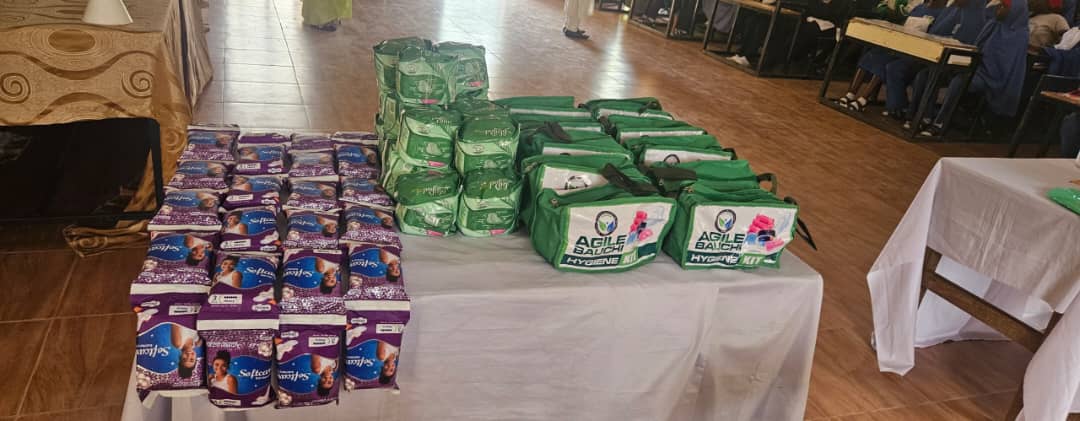
The interactive session allowed participants to ask questions and seek clarification on menstrual health issues. At the end of the programme, AGILE and its partners distributed menstrual hygiene kits containing essential items to support healthy menstrual hygiene practices among the girls.
The event forms part of AGILE’s broader efforts to improve educational outcomes for adolescent girls by addressing barriers that hinder their participation, retention, and success in school.