By Rauf Oyewole
The Minister of Power, Engr. Joseph Olasunkanmi Tegbe, has said President Bola Ahmed Tinubu’s ambition of building a $1 trillion Nigerian economy is closely linked to sustained investment in the country’s electricity sector.
Tegbe said reliable electricity infrastructure was critical to achieving economic growth, expanding businesses, attracting investments and improving public services across the country.
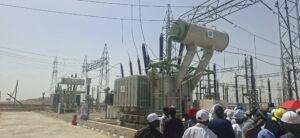
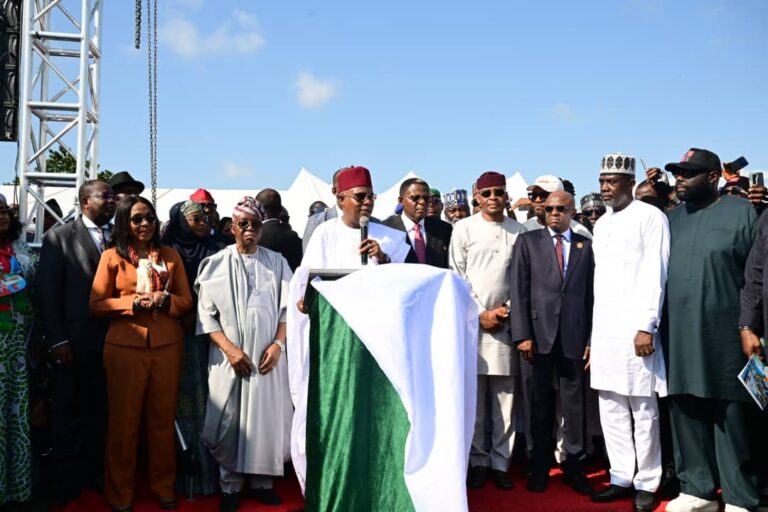
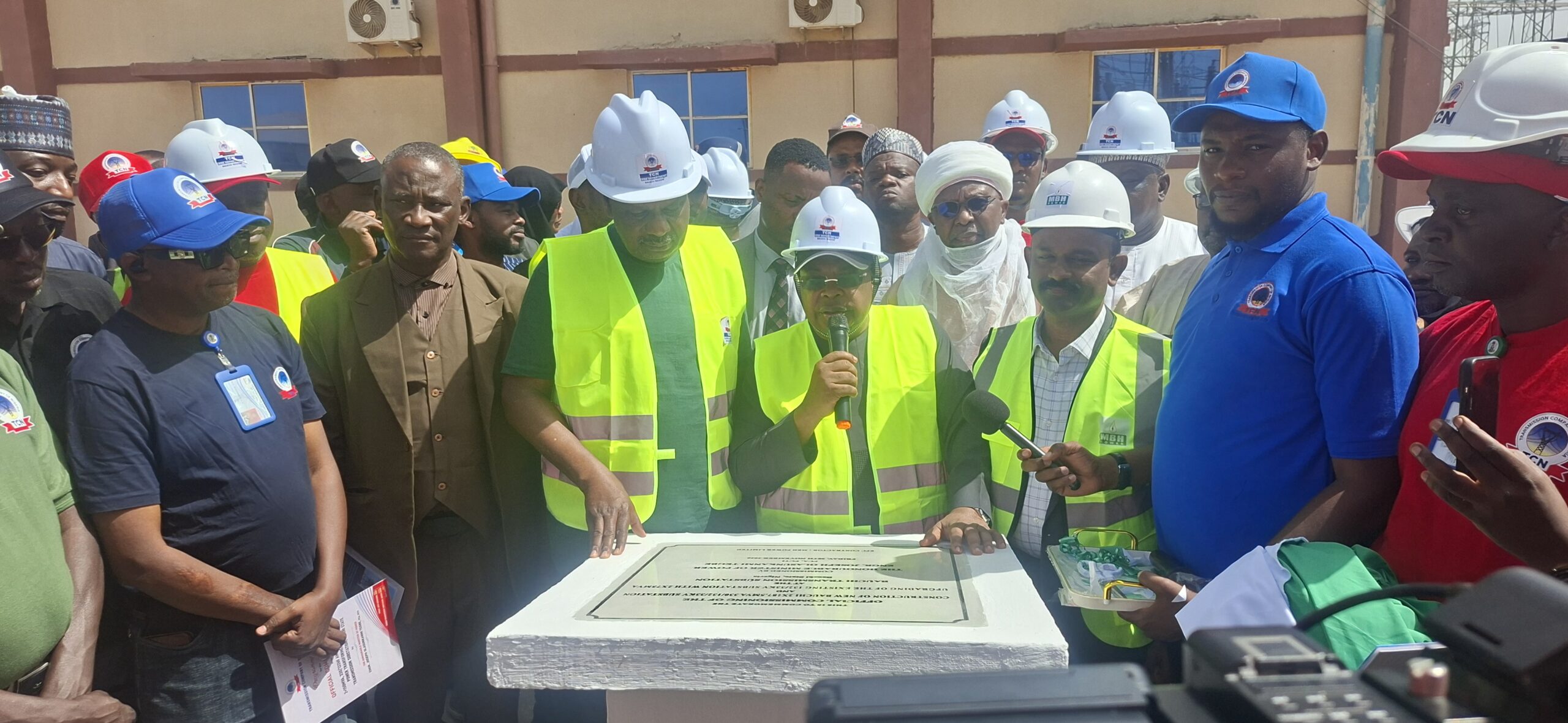
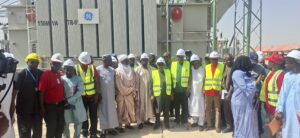
The minister stated this on Friday in Bauchi during the commissioning of the upgraded Bauchi 330/132/33kV transmission substation, where he said the Federal Government was strengthening electricity infrastructure to support the country’s growing economic activities.
According to him, the administration’s approach to the power sector is anchored on ensuring that investments in electricity infrastructure translate into measurable economic and social benefits.
“Mr President’s aspiration to position Nigeria towards a one trillion dollar economy is therefore aligned with what we’re doing in the electricity sector,” he said.
Tegbe explained that the upgraded Bauchi transmission substation represented a significant improvement in the state’s capacity to receive and distribute electricity, adding that the project would also support future expansion in power generation.
He said the facility, which was previously a 132/33kV substation with an installed capacity of 112.5MVA, had been upgraded to a 330/132/33kV transmission facility.
The upgrade includes the installation of two 150MVA 330/132kV transformers, providing an upstream transformation capacity of 300MVA.
At the downstream level, the existing 22.5MVA and 30MVA transformers have been replaced with two 60MVA units, while the existing 60MVA transformer was retained, bringing the total downstream capacity to 180MVA.
The minister said the project also includes a modern control room, two 330kV line bays, four 132kV bays, three additional 33kV outgoing feeders and upgraded control and protection facilities.
He estimated that more than 80,000 households would benefit from the intervention, which is expected to strengthen electricity supply to Bauchi metropolis, Ningi, Dass, Alkaleri and neighbouring communities.
“We are preparing our transmission capacity while we build up our generation capacity, so that we don’t have hiccups when we’re ready to push additional power through the grid,” he said.
Tegbe noted that the project demonstrated the importance of collaboration between the Federal Government, the Transmission Company of Nigeria (TCN), the World Bank and the contractors involved in the execution.
He said the Federal Government was undertaking similar transmission infrastructure upgrades in several states, including Lagos, Oyo, Katsina, Kano, Kaduna and Borno, with additional interventions planned for Abia, Edo and Enugu states.
The minister also called on residents to protect electricity infrastructure against vandalism, warning that the destruction of transmission facilities would undermine economic activities and impose additional costs on the country.
“There is no justification for destruction and damage of critical national assets. The cost of vandalism will be felt in interrupted trade, interrupted light, interrupted power, disrupted working hours and disrupted family lives,” he said.
He urged host communities to report suspicious activities around electricity installations and support efforts to safeguard the facilities.
Tegbe commended the Bauchi State Government, particularly Governor Bala Mohammed, for what he described as a constructive partnership with the Federal Government in facilitating development projects.
He also appreciated the World Bank for its financial support and MBH Power, alongside its consortium partner, Schreder, for their contributions to the successful completion of the project.
The minister subsequently commissioned the upgraded transmission substation on behalf of President Tinubu.
Meanwhile, the Managing Director/Chief Executive Officer (CEO) of Transmission Company of Nigeria (TCN), Engr. Sule Ahmed Abdulaziz, said with the development, the facility now has 300MVA transformation capacity at the 330/132kV level and 180MVA at the 132/33kV level. “This is a substantial enhancement of the substation and provides additional flexibility for bulk power transmission and distribution interface within the network.
“The intervention has strengthened bulk power supply delivery to Jos Electricity Distribution Company (JEDC), providing greater capacity at the transmission-distribution interface that supports electricity distribution to customers across the befitting communities, subject to available generation and downstream network capacity. The benefitting areas under JEDC include Ningi, Dass, Bauchi GRA, Yankari, Nabordo, Dabo Farm and Gubi, with an estimated additional 64,800 beneficiaries.
The project, according to him, was awarded in January 2021 and completed in June 2026, was executed by a joint venture of MBH Power Limited and Shreem Electric Limited, with funding from the World Bank. “Its successful delivery involved extensive engineering, equipment installation, testing and commissioning works. We appreciate the World Bank’s support and acknowledge the contributions of the project contractors, consultants and all TCN engineers who participated in bringing the project to completion,” he said.